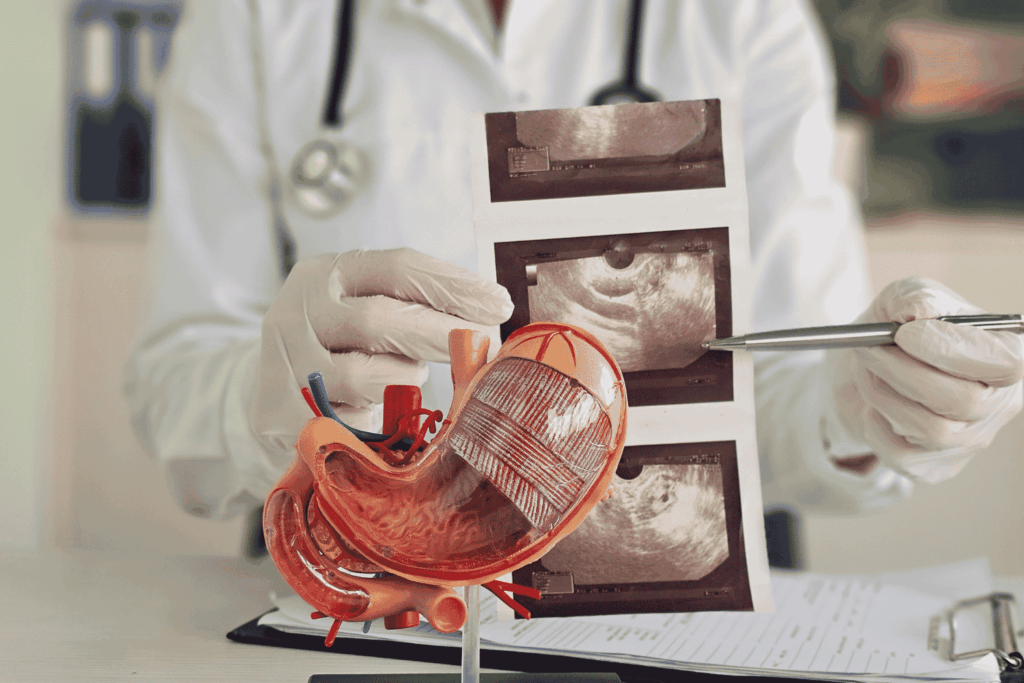
Endoscopic Ultrasound (EUS) is an advanced diagnostic and interventional technique that combines endoscopy with ultrasound imaging. It allows detailed visualisation of structures within and around the gastrointestinal tract, including the pancreas, bile ducts, liver and surrounding tissues.
Dr. Venkatesh Reddy Raya has specialised fellowship training in Advanced Endoscopy and Endoscopic Ultrasound (EUS) from KIMS Hospitals. His expertise includes both diagnostic and therapeutic applications of advanced endoscopy.
EUS can provide detailed information about structures that may not be adequately assessed through conventional endoscopy alone. It can be particularly useful in evaluating conditions involving the gastrointestinal tract and surrounding organs.
EUS may assist in evaluating:
The exact role of EUS depends on the patient’s symptoms, clinical findings and previous investigations.
One of the important applications of EUS is its ability to facilitate tissue sampling from selected lesions. Dr. Venkatesh has expertise in EUS-FNB (Fine Needle Biopsy).
During an EUS-guided biopsy, ultrasound imaging helps guide a specialised needle toward a selected area so that tissue can be obtained for further examination.
This can be particularly valuable when doctors need additional information about a pancreatic, gastrointestinal or other lesion.
An endoscope equipped with a small ultrasound probe is carefully introduced through the digestive tract. The ultrasound component creates detailed images of structures located close to the gastrointestinal tract.
Depending on the clinical requirement, EUS may be performed through the upper gastrointestinal tract or other appropriate approaches.
The procedure and preparation requirements vary depending on the purpose of the examination.
EUS requires specialised training because it involves both endoscopic assessment and interpretation of ultrasound images. Dr. Venkatesh’s fellowship training in Advanced Endoscopy has provided specialised exposure to EUS and its applications in complex gastrointestinal and hepatobiliary conditions.
EUS can provide important information when conventional investigations do not provide sufficient detail. It may also help doctors plan appropriate treatment for selected gastrointestinal, pancreatic and biliary conditions.
Dr. Venkatesh evaluates each patient individually and considers the clinical history, symptoms, imaging and other available investigations before recommending EUS.
The goal is to achieve a clearer understanding of the underlying condition and help guide an appropriate treatment plan.
Get expert evaluation and advanced endoscopic care for digestive, liver, pancreatic and gastrointestinal conditions.