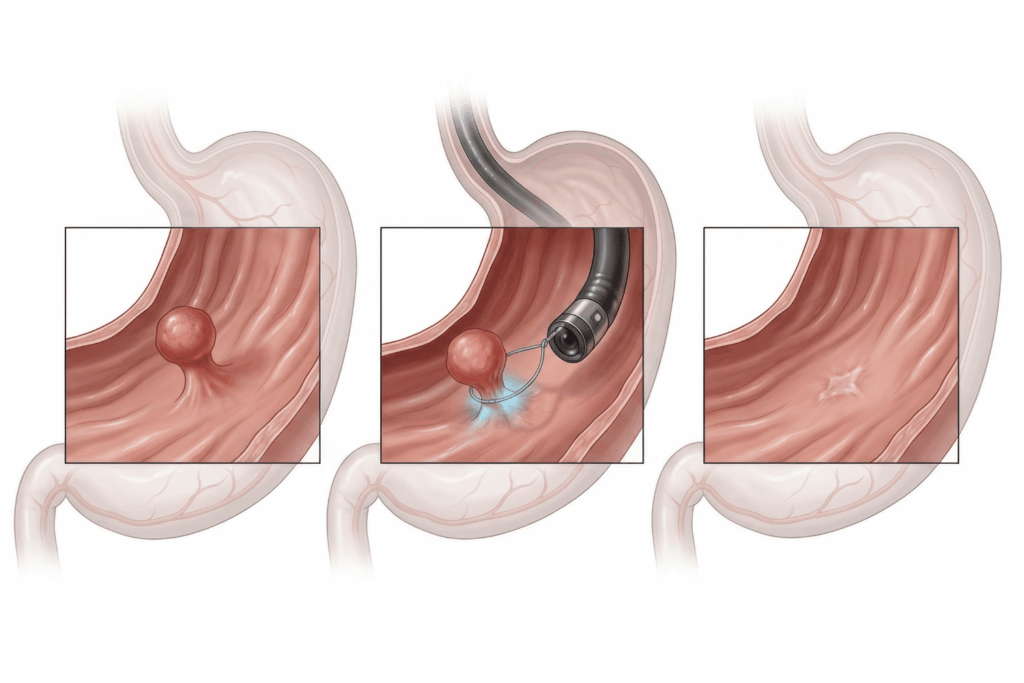
Precision Endoscopic Removal of Selected Gastrointestinal Lesions
Endoscopic Submucosal Dissection (ESD) is an advanced therapeutic endoscopic procedure used to remove selected lesions from the gastrointestinal tract, particularly when precise removal of a lesion is required.
Dr. Venkatesh Reddy Raya has expertise in advanced therapeutic endoscopy, including ESD, as part of his specialised procedural practice.
What Is ESD?
ESD allows a selected gastrointestinal lesion to be carefully dissected from the underlying tissue layers and removed using an endoscope.
Unlike conventional surgery, the procedure is performed through the gastrointestinal tract without an external surgical incision.
ESD can be considered for selected lesions where en-bloc removal may provide important diagnostic and therapeutic benefits.
Where Can ESD Be Used?
Depending on the location and characteristics of a lesion, ESD may be considered for selected lesions within the:
- Oesophagus
- Stomach
- Colon
- Other appropriate areas of the gastrointestinal tract
Not every gastrointestinal lesion requires ESD. The appropriate technique depends on the size, location, depth and characteristics of the lesion.
Why Precise Lesion Removal Matters
In selected cases, removing a lesion in one piece can help provide a more complete specimen for pathological assessment. This may assist doctors in understanding the lesion’s characteristics and determining whether further treatment is required.
ESD is therefore both a therapeutic and potentially important diagnostic procedure in appropriately selected cases.
Advanced Endoscopic Expertise
ESD is a technically demanding procedure that requires advanced training and detailed knowledge of gastrointestinal anatomy.
Dr. Venkatesh’s expertise in advanced endoscopy allows him to evaluate suitable gastrointestinal lesions and consider advanced endoscopic treatment when clinically appropriate.
Individualised Evaluation
Before ESD is recommended, the lesion must be carefully evaluated. The assessment may involve endoscopy, imaging and other relevant investigations.
Treatment planning considers:
- Lesion size
- Location
- Appearance
- Depth
- Clinical history
- Previous investigations
The goal is to determine whether ESD is appropriate or whether another endoscopic or surgical treatment would be more suitable.