Specialised Endoscopic Evaluation of the Small Intestine
Enteroscopy is a specialised endoscopic procedure used to examine portions of the small intestine that may not be easily reached using routine upper gastrointestinal endoscopy.
Dr. Venkatesh Reddy Raya includes Enteroscopy among his areas of advanced endoscopic expertise and uses specialised endoscopic evaluation as part of comprehensive care for selected gastrointestinal conditions.
Why Is Enteroscopy Needed?
The small intestine is a long and anatomically complex part of the digestive system. Some conditions affecting this area may require specialised endoscopic assessment when other investigations do not provide enough information.
Enteroscopy may be considered in selected patients with:
Unexplained gastrointestinal bleeding
Suspected small intestinal lesions
Abnormal findings requiring direct visualisation
Selected intestinal disorders
Other conditions requiring deeper small bowel evaluation
The need for enteroscopy depends on the patient’s symptoms and findings from previous investigations.
What Happens During Enteroscopy?
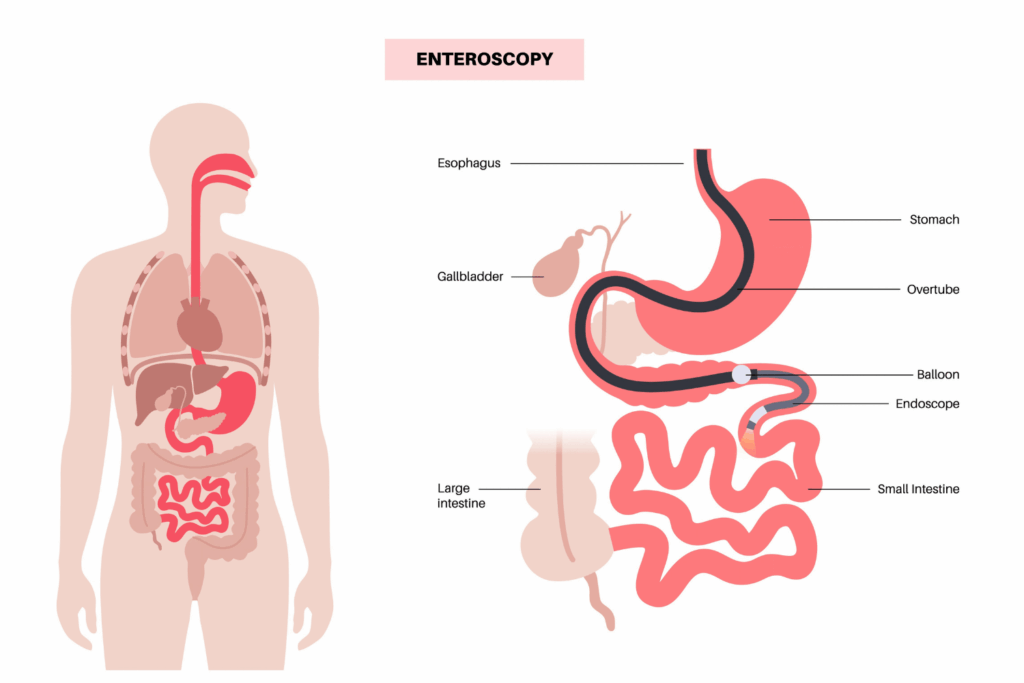
During enteroscopy, a specialised endoscope is carefully advanced through the digestive tract to examine portions of the small intestine.
The procedure allows direct visualisation of the intestinal lining. Depending on the findings and clinical indication, additional therapeutic or diagnostic interventions may sometimes be performed during the same procedure.
Diagnosing Small Intestinal Conditions
Some small intestinal conditions can be difficult to diagnose using routine endoscopy. Enteroscopy can provide direct visual assessment of areas that may otherwise be challenging to reach.
It can help doctors identify abnormalities and, where appropriate, guide further management.
When Is Enteroscopy Recommended?
Enteroscopy is not routinely required for every patient with digestive symptoms. It is generally considered when there is a specific clinical indication and when other investigations suggest that detailed small bowel evaluation may be useful.
A gastroenterology consultation helps determine whether enteroscopy is appropriate based on:
Symptoms
Medical history
Previous endoscopy findings
Imaging results
Laboratory investigations
Suspected underlying condition
Advanced, Patient-Focused Endoscopic Care
As a Consultant Gastroenterologist, Hepatologist and Therapeutic Endoscopist, Dr. Venkatesh Reddy Raya combines clinical assessment with specialised endoscopic expertise to evaluate complex gastrointestinal conditions.
His approach is centred on selecting the appropriate diagnostic or therapeutic procedure based on each patient’s individual clinical needs, with the aim of providing precise and comprehensive gastrointestinal care.
Other Services
Take the Next Step Towards Better Digestive Health
Get expert evaluation and advanced endoscopic care for digestive, liver, pancreatic and gastrointestinal conditions.